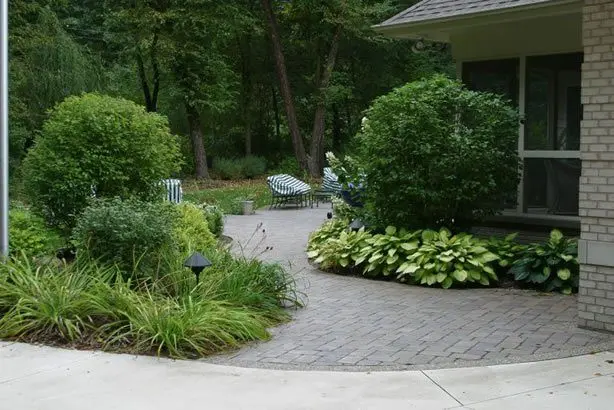
Why Grading & Drainage Is the Foundation of a Healthy Landscape
Grading and drainage rarely get the attention that patios, plantings, or lighting do, but they are arguably the most important system on your property. Every other landscape element — your lawn, your garden beds, your hardscape, even your home's foundation — depends on water moving correctly across and away from your land. When grading is wrong, the symptoms show up everywhere else: soggy lawn patches that never dry out, mulch beds that wash away every heavy rain, a driveway edge that erodes a little more each spring, or worse, water finding its way toward your foundation and basement. Getting grading and drainage right the first time is far less expensive than the repeated fixes and eventual structural repairs that come from ignoring it.
Landforms Design Inc has been solving Cedar Rapids drainage problems since 1984. We've seen essentially every version of poor grading Eastern Iowa's clay soil can produce, and we approach every project as a whole-property water management plan, not just a patch for the one wet spot a homeowner called about.
Our Approach to Grading & Drainage
We begin with a comprehensive site evaluation that traces how water actually behaves on your property during a real Iowa rain event — where it enters from neighboring properties or the street, where your roof downspouts discharge, how your existing grade slopes (or fails to slope) away from your foundation, and where low points collect and hold water. This is diagnostic work, and it's the step that separates a lasting fix from a cosmetic one. A soggy corner of the yard is often a symptom of a grading problem elsewhere on the property, not an isolated issue that can be solved just by digging a hole and filling it with gravel.
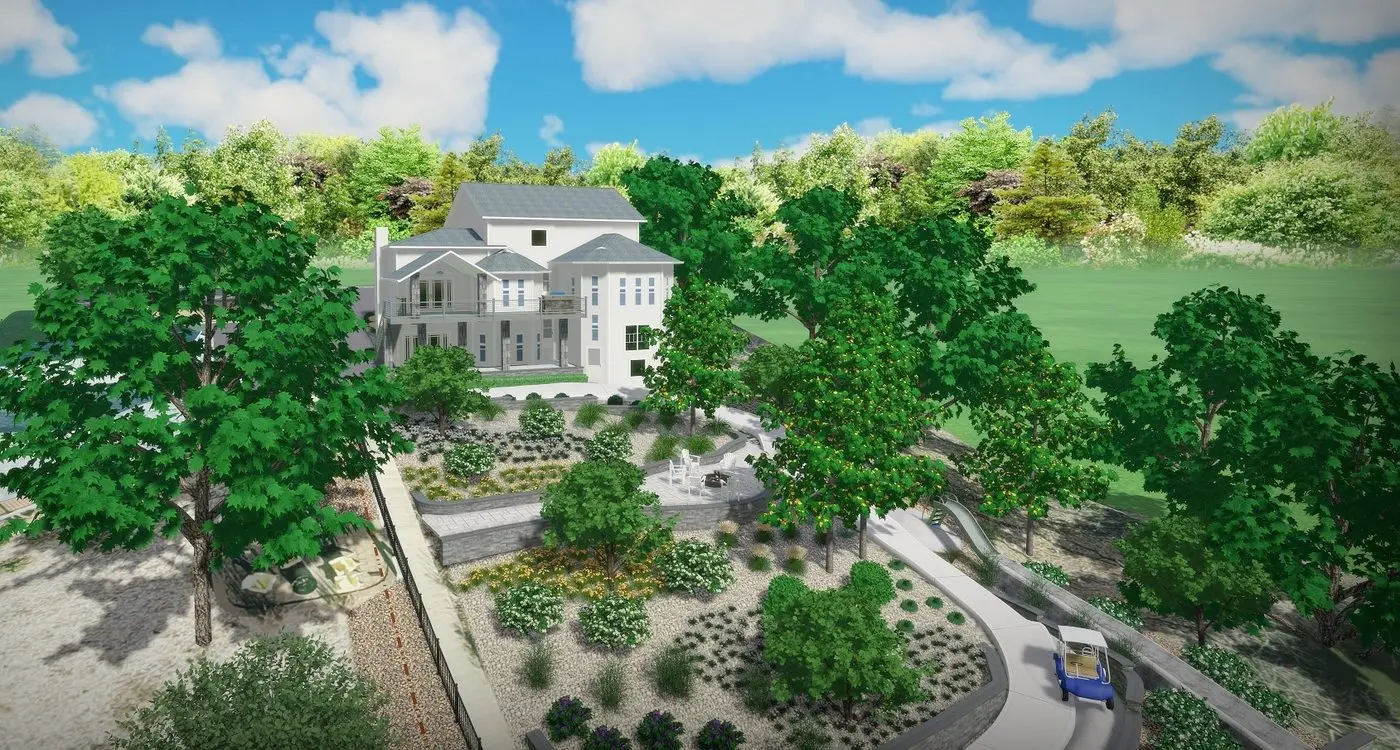
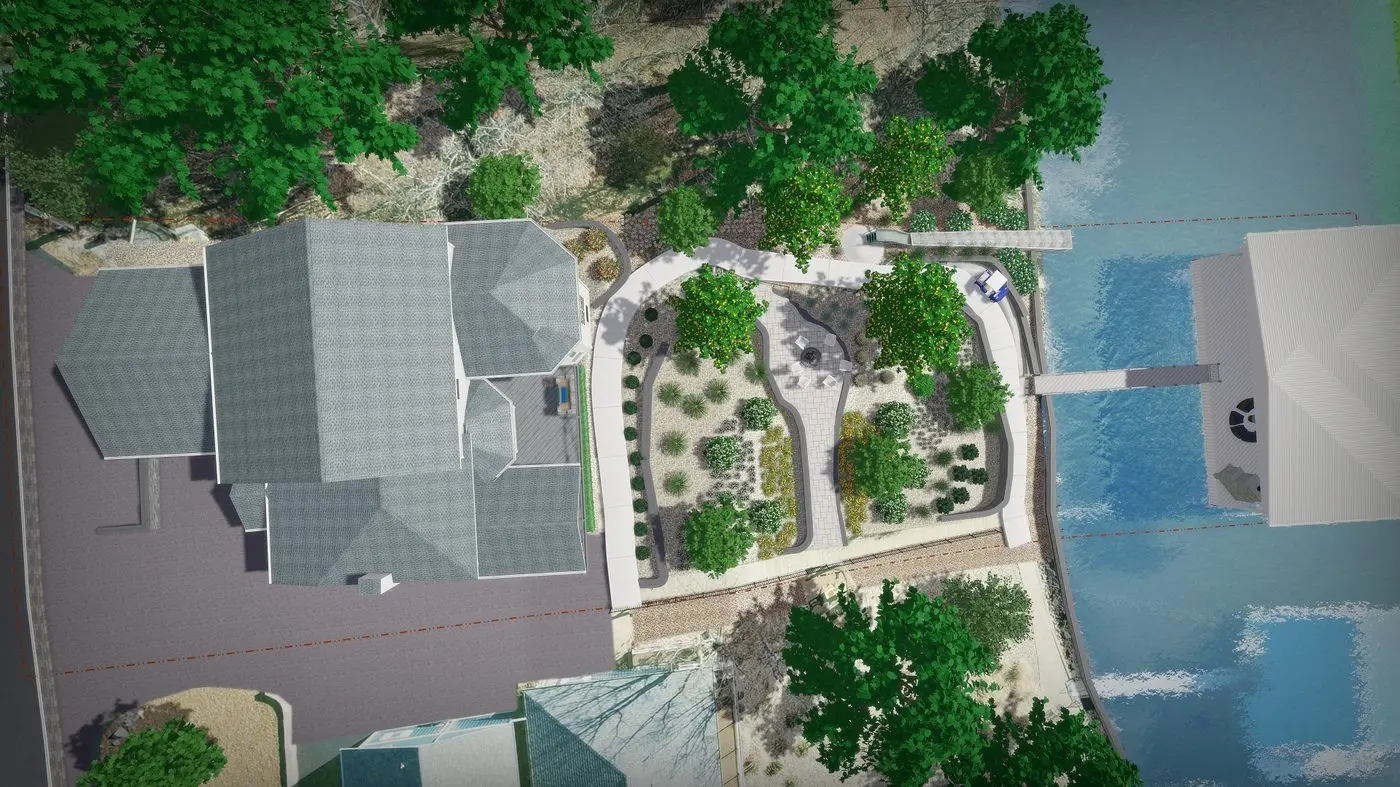
For more complex properties, we use our Uvision 3D Landscape Creator software to model proposed grade changes and drainage routing before construction begins, which is especially valuable when a drainage solution needs to be integrated with a retaining wall, patio, or planting plan so the finished result functions well and looks intentional rather than utilitarian.
Grading Fundamentals
Proper grading starts with the area immediately around your home's foundation. The generally accepted standard is a slope of at least 6 inches of fall over the first 10 feet away from the foundation, ensuring water sheds away from your home rather than pooling against it — a critical detail in Cedar Rapids, where clay soil expansion from moisture buildup near a foundation can contribute to cracking and basement seepage. From there, we grade the broader yard to move water toward appropriate discharge points — a storm sewer connection, a rain garden, a dry creek bed, or simply a lower area of the property designed to handle occasional standing water without damage.
Regrading isn't always about dramatic slope changes. Sometimes it's subtle — correcting a few inches of reverse slope near a patio edge, filling a low spot that's developed over years of soil settling, or reshaping a swale so it channels water effectively instead of just existing as an awkward dip in the lawn. We calculate grade changes precisely rather than guessing, since even small errors in slope direction can send water toward, instead of away from, a structure.
Drainage Systems We Install
Depending on what a property needs, our drainage solutions include:
- French drains — perforated pipe wrapped in filter fabric and bedded in clean drainage stone, installed to intercept and redirect subsurface water before it surfaces as a wet spot
- Surface drainage systems including catch basins and area drains connected to solid PVC piping that carries water to an appropriate discharge point
- Downspout extensions and underground downspout routing to move roof water well away from the foundation instead of dumping it at the base of the house
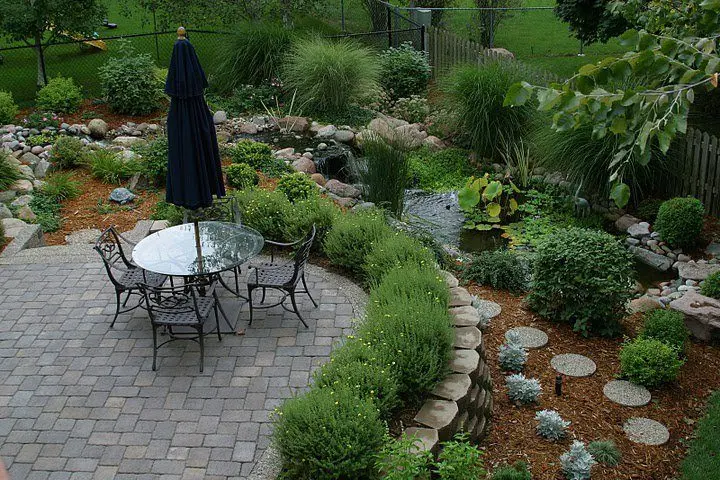
- Dry creek beds that combine function and aesthetics, channeling surface water through a naturalized stone feature rather than a purely utilitarian pipe or ditch
- Swale regrading to reshape natural low points into effective, gently sloped channels that move water without erosion
- Rain gardens designed with water-tolerant native plantings that absorb and filter runoff in an attractive, low-maintenance feature rather than a plain drainage structure
We select the right combination of these tools based on the specific problem, the volume of water involved, and how the solution needs to integrate with the rest of your landscape.
The Homeowner Process
Most grading and drainage projects begin with a site visit during or shortly after a rain event if possible, since seeing water actually behave on the property is far more informative than evaluating dry ground. We then develop a proposed solution, review it with you, and schedule installation. Smaller projects like downspout extensions or a single French drain typically take one to two days. Larger whole-property regrading projects, especially those integrated with retaining walls or major landscape renovation, can take one to two weeks. We always restore disturbed areas with topsoil and seed or sod as part of the project, so the finished result looks complete, not like a construction zone with a pipe sticking out of the ground.
Why Cedar Rapids Conditions Make This Service Essential
Eastern Iowa's soil is predominantly heavy clay or clay-loam, which has very poor percolation — water sits on top of or just below the surface rather than draining through, especially compared to sandier soils found elsewhere in the country. Combine that with Iowa's pattern of intense spring rain events, occasional summer thunderstorms that dump significant rainfall in a short period, and snowmelt from a season of accumulated snowpack, and you have a climate that regularly stresses whatever drainage infrastructure a property does or doesn't have. Cedar Rapids' history with the Cedar River, including major flood events, has also raised general awareness of water management, but many homeowners don't realize that smaller-scale grading and drainage problems on their own property are essentially the same physics playing out at a much smaller scale — water always finds the path of least resistance, and if that path leads toward your home, it will eventually cause damage.
Professional Grading vs. DIY
Grading looks deceptively simple — move some dirt so water goes the other way — but doing it correctly requires understanding slope percentages, how adjoining grade changes affect neighboring properties (a real legal and practical consideration), and how to tie surface grading into any subsurface drainage systems. DIY regrading attempts often solve the immediate visible problem while creating a new one nearby, because water that's redirected still has to go somewhere. Installing a French drain without proper fall along its length, or without adequate drainage stone and fabric to prevent silt clogging, results in a system that works for a season or two and then fails silently underground, invisible until the original wet-spot symptom returns. Professional grading and drainage work accounts for the entire property's water behavior, not just the symptom a homeowner happened to notice.
Frequently Asked Questions
Why does water keep collecting in the same spot in my yard?
Standing water in a consistent location almost always indicates a low point in your yard's grade, often combined with Iowa's slow-draining clay soil beneath it. Simply filling the spot with soil is often a temporary fix, since the surrounding grade may still direct water to that same low area. A proper fix involves regrading a broader area to redirect water flow, sometimes combined with a French drain or catch basin to handle water at the source.
How do I know if my drainage problem is affecting my foundation?
Warning signs include damp basement walls, efflorescence (white mineral deposits) on foundation walls, cracks that seem to change with the seasons, or visibly ponding water near your foundation after rain. Because clay soil expands significantly when saturated, drainage problems near a foundation can contribute to real structural stress over time. We evaluate foundation-adjacent grading as a priority on every drainage consultation, since this is the highest-stakes application of proper water management.
What is a French drain and do I need one?
A French drain is a trench containing a perforated pipe wrapped in filter fabric and surrounded by clean drainage stone, designed to intercept water moving through the soil and redirect it to a safe discharge point before it surfaces as a wet spot or works its way toward a foundation. Whether you need one depends on whether your drainage problem is primarily a subsurface water issue or a surface grading issue — something we determine during our site evaluation rather than installing by default.
Can grading and drainage work be combined with a patio or retaining wall project?
Yes, and in fact we recommend addressing drainage as part of any larger hardscape project rather than as an afterthought. Retaining walls in particular require integrated drainage to function properly and avoid hydrostatic pressure failure, and patios need correct slope built in from the base preparation stage. Planning drainage alongside hardscape from the start is more cost-effective than retrofitting it later.
How much does drainage work cost in Cedar Rapids?
Costs vary significantly based on the scope of the problem — a simple downspout extension is a minor expense, while a whole-property regrading project with multiple French drains and catch basins is a larger investment. Because every property's water behavior is different, we provide accurate estimates only after an on-site evaluation, ideally including observation of how the property handles an actual rain event.
Ready to Get Started?
Contact Landforms Design Inc today for a free estimate. We serve Cedar Rapids and all of Eastern Iowa.
Request Your Free Quote