


Does Retaining Wall Need Drainage?
- WIX EXPERT SEO SPECIALIST
- May 8
- 6 min read

A retaining wall can look solid on day one and still fail years early if water is trapped behind it. That is why homeowners and property managers often ask, does retaining wall need drainage? In most cases, yes. Drainage is not an add-on or a nice extra. It is one of the main systems that protects the wall from pressure, movement, cracking, and premature collapse.
In Eastern Iowa, that question matters even more. Our soils, seasonal freeze-thaw cycles, and heavy rain events can all work against a poorly built wall. A retaining wall is holding back more than dirt. It is also dealing with moisture moving through the soil over time. If that water has nowhere to go, the wall takes the hit.
Why a retaining wall needs more than strength
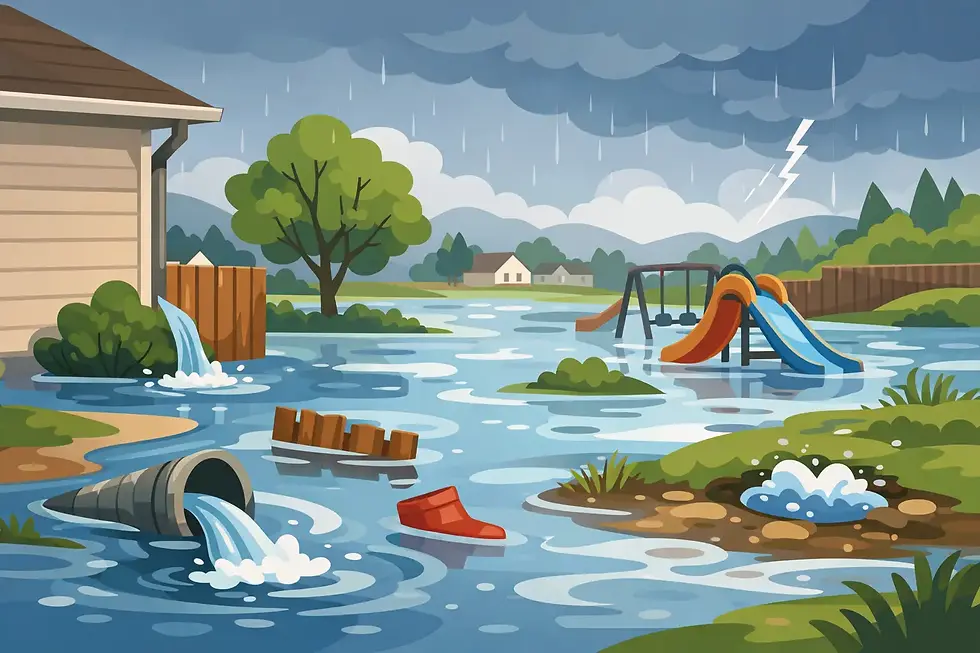
People often focus on the visible part of a retaining wall - the block, stone, or timber face. What matters just as much is what sits behind it. Soil expands when it is saturated, and water adds hydrostatic pressure against the back of the wall. That pressure can push a wall forward, bow it out, or create gradual movement that shows up as cracks, gaps, or uneven settling.
Even a well-built wall made from quality materials can struggle if drainage was ignored. The wall may start to lean, sections may separate, or the base may shift as water softens supporting soils. In winter, trapped moisture can freeze and expand, which adds another layer of stress. For Iowa properties, that freeze-thaw pressure is a real part of long-term wall performance.
So if the question is simply, does retaining wall need drainage, the practical answer is yes for nearly every permanent installation. The bigger question is what kind of drainage the wall needs and how it should be built into the project from the start.
Does retaining wall need drainage in every case?
Almost every retaining wall benefits from drainage, but the exact system depends on the wall height, material, slope conditions, and soil type. A short decorative garden wall that holds very little soil may need less drainage detail than a taller structural wall managing a grade change across a backyard or commercial site.
That said, short walls are not automatically safe without drainage. If the site collects runoff, sits at the bottom of a slope, or has dense clay-heavy soil, even a low wall can run into problems. Eastern Iowa properties often include conditions where water moves slowly through the soil, which means pressure can build faster than many people expect.
A professionally designed wall looks at the full site, not just the wall itself. Surface runoff, downspout discharge, grading, and nearby hardscapes all affect how much water reaches the area behind the wall.
When drainage is absolutely necessary
Drainage becomes critical when a wall is over a few feet tall, when the grade above the wall sheds water toward it, or when the wall supports driveways, patios, sidewalks, or other structures. It is also essential where poor-draining soils are present or where water may collect after storms.
Commercial sites and HOA-managed landscapes should be especially careful here. A retaining wall failure is not just cosmetic. It can create trip hazards, drainage issues, property damage, and expensive reconstruction.
What proper retaining wall drainage looks like
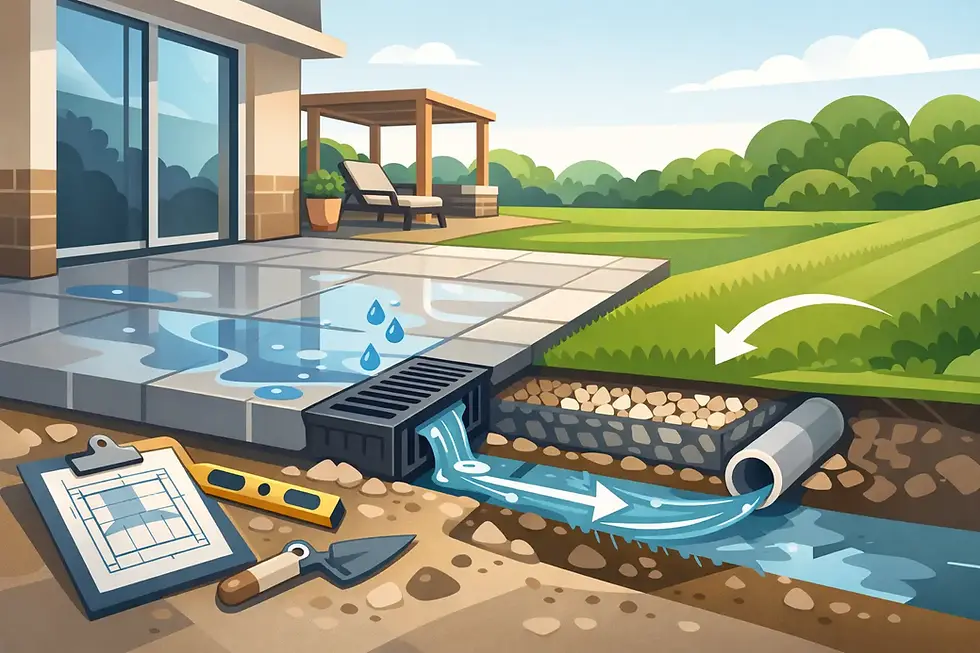
Good drainage is usually a system, not a single product. It starts with clean, free-draining aggregate behind the wall rather than compacted native soil pressed directly against the back. That stone creates space for water to move down instead of building pressure.
A perforated drain tile is commonly installed near the base of the wall to collect and redirect water. Filter fabric is often used to help separate soils from the drainage stone so fines do not clog the system over time. Depending on the wall type and design, outlets or weep openings may also be used so the collected water has a clear path to escape.
This is where experience matters. A drain pipe that has no outlet, stone that is too shallow, or fabric that is installed incorrectly can leave the wall vulnerable even if it looks right during construction.
Drainage behind the wall vs. drainage around the site
Homeowners sometimes assume a drain pipe behind the wall solves everything. It does not. Site grading is just as important. If downspouts dump water into the retained area, if a patio slopes toward the wall, or if the yard funnels runoff into that zone, the drainage system may be overloaded.
The best results come from looking at the full water movement pattern across the property. In many projects, retaining wall drainage and yard drainage need to be planned together.
Common signs a retaining wall has drainage problems
Drainage issues do not always appear right away. Some walls look fine for the first season or two, then start showing stress as soils shift and moisture cycles repeat.
Warning signs include a wall that is leaning forward, bulging in the middle, cracking, separating at joints, or showing erosion near the base. Water staining can also be a clue, especially if the wall stays wet long after rain. In paved areas above or below the wall, you may notice settling or movement that points to moisture-related soil instability.
If any of those issues are present, the problem may not be the wall face alone. It may be what is happening behind it.
Material choice affects drainage needs
Block retaining walls, natural stone walls, timber walls, and poured concrete walls all respond differently to water, but none of them are immune to drainage problems. Segmental retaining wall block systems are often designed with drainage stone and geogrid reinforcement as part of the full assembly. Timber walls may deteriorate faster when moisture is trapped. Concrete can crack under pressure, and stone walls can shift if the base or backfill becomes unstable.
The wall material changes the construction method, but not the need to manage water. In fact, stronger-looking walls sometimes give a false sense of security. A heavy concrete wall without proper drainage can still fail.
Why DIY retaining walls often run into trouble
Many wall failures come from installations that focused on stacking material rather than engineering the conditions behind it. A wall can be level, straight, and attractive at first, yet still be built on a weak base or backed by the wrong fill.
DIY projects often skip excavation depth, compacted base preparation, drainage aggregate, pipe placement, or proper grading. Those shortcuts may save money upfront, but they tend to create much higher repair costs later. Rebuilding a failed retaining wall usually costs more than building it correctly the first time.
For taller walls or walls near structures, drainage should never be guessed at. Local soil conditions, surcharge loads, and code requirements all matter.
Does retaining wall need drainage in Iowa soils?
Yes, and local conditions are a big reason why. In Cedar Rapids and across the Corridor, retaining walls often deal with clay content, variable rainfall, snowmelt, and freeze-thaw cycles. That combination can hold water in the soil, increase expansion pressure, and reduce stability if the wall system is not designed to drain.
This is one reason professionally built walls tend to last longer and perform better. At Landforms Design, retaining wall work is approached as part of the complete landscape and grading system, because long-term durability depends on more than the visible finish.
How to think about drainage before a wall is built
If you are planning a retaining wall, the best time to address drainage is before design and construction are finalized. Start by asking where water comes from, where it currently goes, and whether the new wall will interrupt that pattern. A wall at the bottom of a slope, beside a patio, or below roof runoff has a very different drainage demand than one in a flat, well-drained area.
It also helps to think beyond the wall itself. Will nearby planting beds hold extra moisture? Will irrigation add water behind the wall? Will winter snow piles melt into that zone? These details affect performance over time.
A well-built retaining wall should look good, fit the property, and hold its line for years. That only happens when drainage is treated as part of the structure, not as an afterthought.
If you are weighing cost, this is one area where cutting corners rarely pays off. A proper drainage system is far less expensive than repairing a wall that starts to move. When water is managed correctly from the beginning, the wall has a much better chance of staying straight, stable, and dependable through Iowa weather year after year.
Before you choose materials or compare wall styles, make sure the plan answers the water question first. That is usually the difference between a wall that simply looks good and one that truly lasts.

Comments