


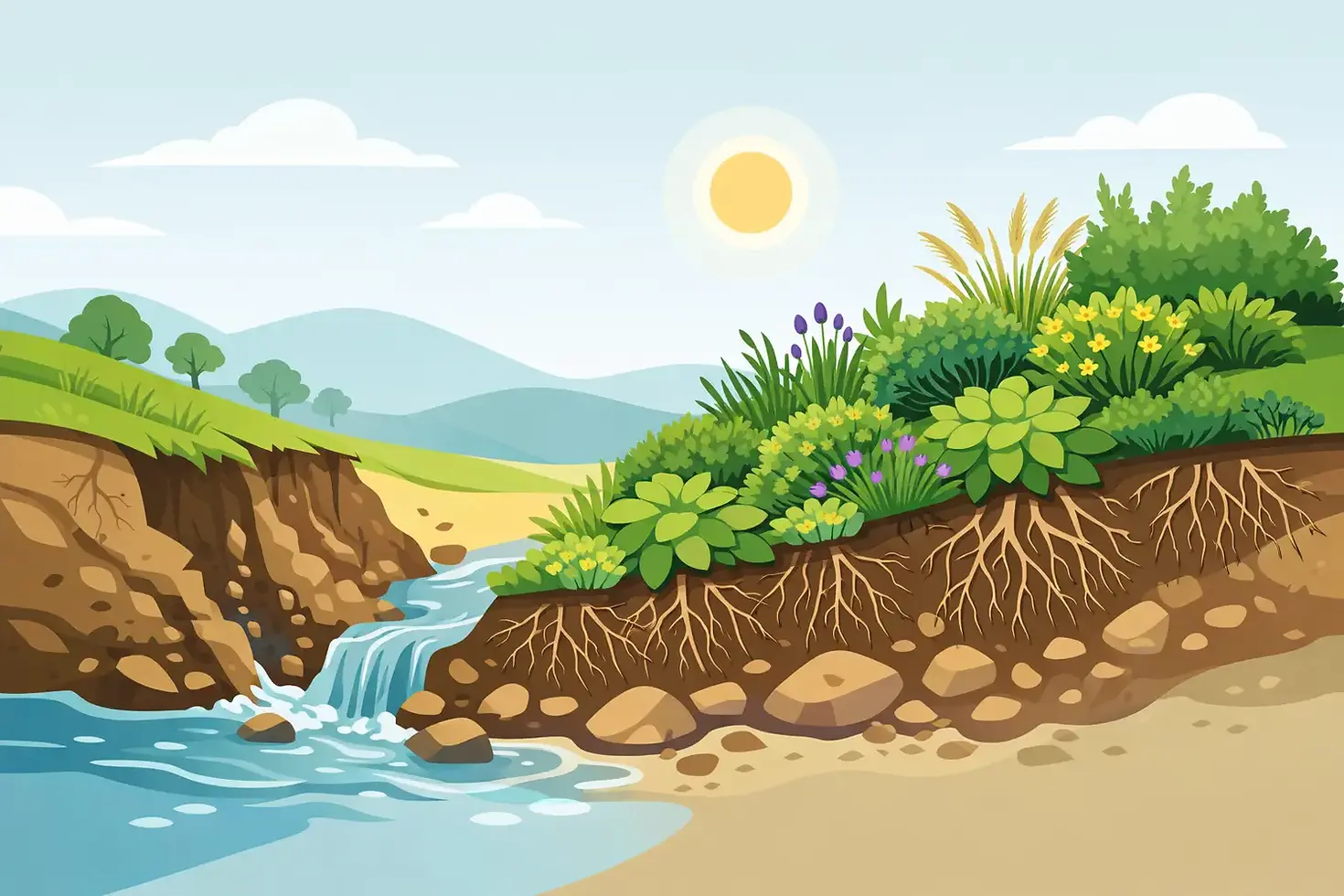
10 Best Plants for Erosion Control
- WIX EXPERT SEO SPECIALIST
- May 26
- 6 min read

A bare slope can look manageable right up until the first hard rain. Then the soil starts moving, mulch washes out, roots get exposed, and what looked like a simple landscape issue becomes a drainage and stability problem. Choosing the best plants for erosion control is one of the smartest ways to protect a property, but plant selection only works when it matches the slope, soil, water flow, and Iowa climate.
In Eastern Iowa, erosion is rarely caused by just one thing. Grade changes, compacted soil, roof runoff, sparse turf, and stormwater concentration often work together. That is why the right planting strategy is not just about filling space. It is about creating root structure, slowing water, and building a landscape that holds together over time.
What makes the best plants for erosion control work
The best-performing erosion-control plants do more than cover the ground. They anchor soil with dense or deep root systems, spread consistently, and handle periods of heavy rain without collapsing or washing out. In many cases, the visible growth above ground matters less than what the plant is doing below the surface.
Grasses are often strong candidates because their fibrous roots create a tight network through the soil. Many native perennials help as well, especially on banks and transition areas where you want both stabilization and seasonal color. Shrubs bring another level of performance by adding woody root mass and helping break the force of runoff on slopes.
There is a trade-off, though. A plant that spreads quickly may need more management to keep it where you want it. A plant with great drought tolerance may not perform as well in a soggy swale. On steep slopes, the best answer is usually a mix of plant types rather than a single species.
Best plants for erosion control in Eastern Iowa
Switchgrass
Switchgrass is one of the most reliable native grasses for erosion control in Iowa. It develops deep roots, tolerates a wide range of soil conditions, and stands up well to heat, wind, and seasonal weather swings. It is especially useful on open slopes, larger naturalized areas, and places where runoff moves fast during storms.
From a design standpoint, switchgrass also adds height and movement. That makes it a strong option when a property owner wants stability without sacrificing appearance.
Little bluestem
Little bluestem works well on drier slopes and areas with leaner soils. Its root system helps hold soil in place, and once established, it requires less input than many traditional landscape plants. It is not the right fit for consistently wet ground, but on sunny banks and edges it performs well.
This is a good example of where site conditions matter. If water regularly sits at the base of the slope, little bluestem may struggle there even if it thrives higher up.
Prairie dropseed
For projects where appearance matters just as much as performance, prairie dropseed is a strong choice. It forms tidy clumps, offers a refined look, and still contributes meaningful root mass for soil stabilization. It is often better for moderate slopes and designed landscape beds than for large, aggressively eroding banks.
Because it grows in clumps rather than spreading aggressively, prairie dropseed is usually best paired with other plants when erosion pressure is more severe.
Creeping juniper
Creeping juniper is a dependable evergreen groundcover for sunny slopes. It spreads low and wide, helps shield the soil surface from rainfall impact, and offers year-round coverage. On residential properties, it is often used where owners want a finished look without constant mowing.
Its main limitation is moisture. On poorly drained sites, juniper can decline. Where the slope is dry and full sun is available, it can be one of the more durable options.
Red osier dogwood
For wetter areas, red osier dogwood is one of the best shrubs to consider. It handles moisture well, establishes strong roots, and works effectively along drainageways, pond edges, and low areas prone to washout. It also adds strong winter color, which is a bonus for properties that need year-round visual interest.
This is a practical plant for function-first areas, but it can also fit into more polished landscape plans when spaced and maintained properly.
Ninebark
Ninebark is a tough native shrub that adapts to many Iowa site conditions. It is useful on slopes where you need more structure than grasses and perennials can provide alone. Its roots help stabilize soil, and its branching form softens grade transitions around retaining walls, drainage features, and larger planting beds.
Because it can grow fairly large, placement matters. It works best where there is room for mature size rather than in tight foundation beds.
Sumac
Sumac, particularly fragrant or smooth varieties depending on site goals, can be valuable on difficult banks. It spreads by suckers, which helps hold larger areas together over time. That same trait means it is not ideal everywhere. In naturalized spaces or commercial edges, that spreading habit can be an advantage. In a tightly controlled ornamental bed, it may create more maintenance than a client wants.
Sedges and rushes
In low spots, bioswales, and drainage corridors, sedges and rushes often outperform standard landscape choices. They are built for moisture, and their root systems help slow and filter water while reducing erosion. If a site stays wet after storms, forcing in a dry-site groundcover usually leads to failure.
These plants are especially useful when erosion is tied directly to drainage patterns rather than just exposed soil.
Daylilies
Daylilies are not native, but they are commonly used for practical erosion control on residential slopes because they are hardy, dense, and adaptable. Their roots help hold surface soil, and they fill in faster than many ornamental perennials. They are not the best solution for severe washouts, but for mild to moderate slope stabilization they can be effective.
They are often chosen when property owners want a familiar, lower-maintenance look.
Creeping phlox and other spreading perennials
On smaller banks and decorative slopes, spreading perennials such as creeping phlox can help protect the soil surface while improving curb appeal. These plants are best used where erosion is light and aesthetics are a major priority. They are not a substitute for deeper-rooted structural plants on steep or actively failing grades.
Matching plants to the erosion problem
Not every erosion issue should be solved with plants alone. That is one of the most important points property owners miss. If runoff from downspouts, hard surfaces, or neighboring grades is concentrating water into one path, the flow may need to be redirected before planting can succeed.
A gentle slope with thinning turf is very different from a steep bank with exposed roots and active channels cut into the soil. The first may improve with better plant coverage and mulch control. The second may need grading, drainage correction, erosion blanket installation, or even a retaining wall combined with planting.
That is why the strongest results usually come from treating the whole system. Soil preparation, drainage management, slope angle, and plant establishment all affect long-term performance.
Where property owners often go wrong
The most common mistake is choosing plants based only on looks. A plant can be attractive in a container and still fail completely on a hot slope or wet drainage edge. Another issue is underestimating establishment time. Even the best plants for erosion control need time to root in, which means temporary protection may be needed during the first growing season.
Mulch is another area where details matter. On flat ground, standard mulch works fine. On slopes, loose mulch can wash away and create more mess than benefit. In some cases, shredded mulch, erosion control matting, or strategic plant spacing works better.
Spacing matters too. If plants are installed too far apart, the soil remains exposed too long. If they are packed too tightly without regard for mature size, they compete and decline. A professional planting plan balances immediate coverage with long-term health.
A better long-term approach to erosion control planting
The best erosion-control landscapes are layered. A project might combine native grasses for root depth, shrubs for structure, and spreading plants for surface coverage. On some sites, stone, edging, swales, or retaining features are also part of the solution. That approach costs more upfront than simply planting a few groundcovers, but it tends to perform better and last longer.
For homeowners and commercial property owners in Cedar Rapids and across Eastern Iowa, local conditions should drive the decision. Freeze-thaw cycles, summer storms, clay-heavy soils, and shifting drainage patterns all affect what will hold and what will fail. That is where experienced planning matters. A properly built landscape does not just look finished on installation day. It continues to stabilize the property season after season.
If you are dealing with slope washout, exposed soil, or recurring runoff damage, the right plants can make a real difference. The key is choosing them as part of a broader strategy that respects the grade, the water, and the way the site actually behaves.


Comments